 Dental implants
 All-on-4 and All-on-6
 Zirconium crowns
 Porcelain veneers
 Hollywood smile
 Composite bonding
 Teeth whitening
The short answer
A bridge needs the teeth on both sides of the gap to be cut down and crowned; an implant stands on its own and the neighbouring teeth are not touched. A bridge is finished sooner, and an implant helps to keep the bone. Which one suits you depends on the neighbouring teeth and on the bone, and is decided at the examination.
How are an implant and a bridge made?
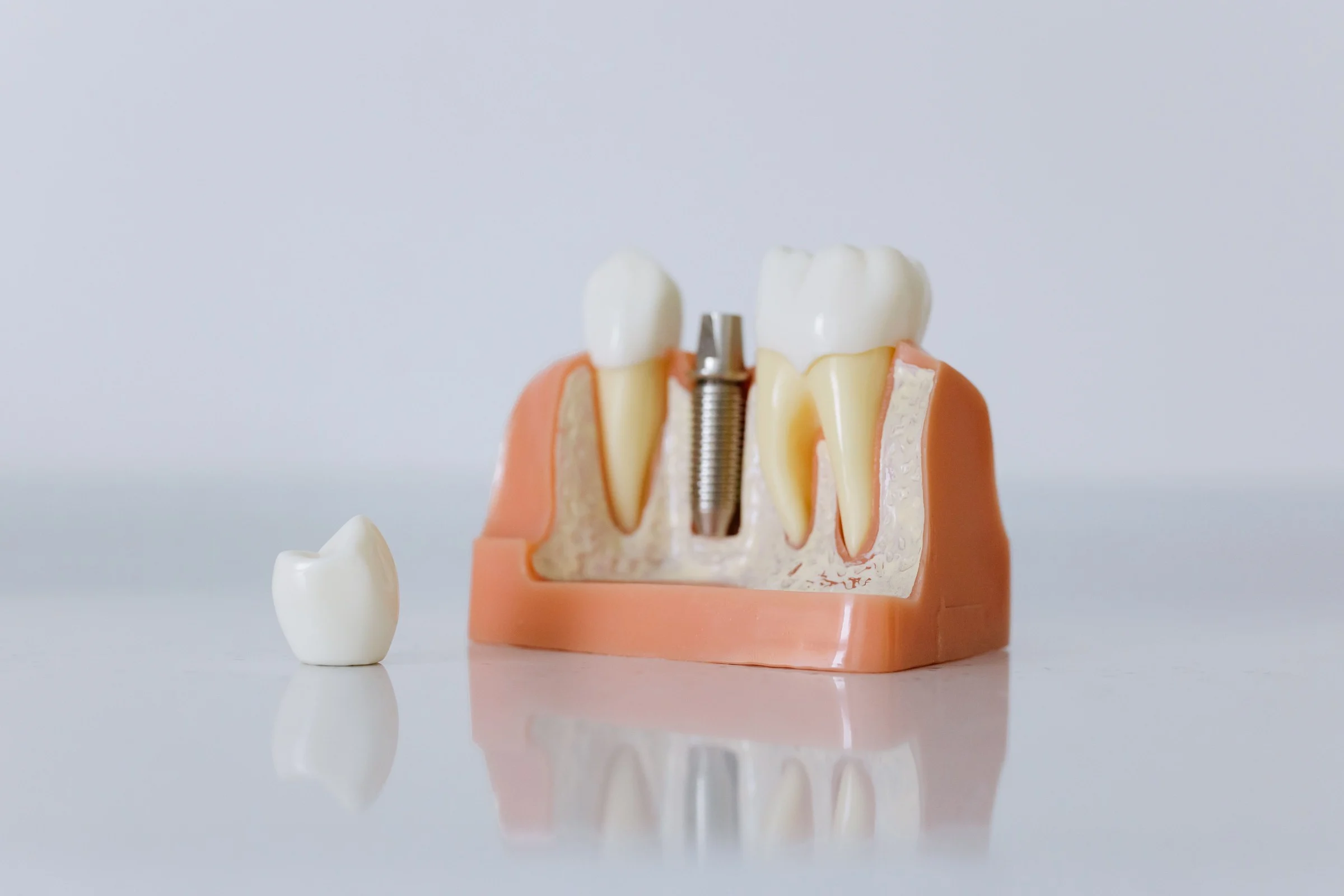
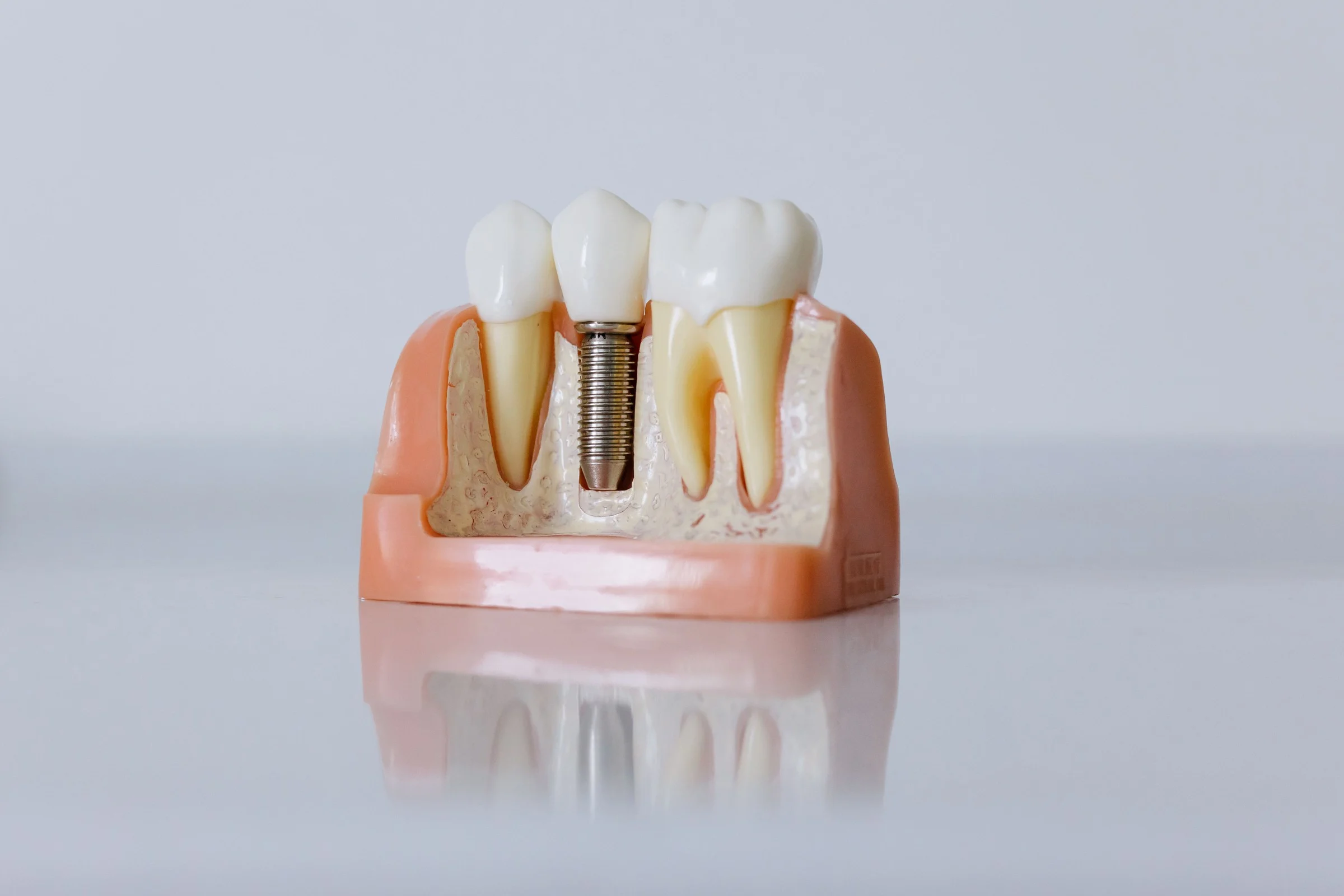
An implant is a titanium screw placed in the jawbone in place of the root of the missing tooth. It usually takes 2 to 4 months to bond with the bone. At the end of this time a permanent tooth is fixed on top of the implant. The neighbouring teeth are not touched.
For a bridge, the teeth on both sides of the gap are reduced so that they can be crowned. A tooth that takes the place of the missing one is joined between the crowns that sit on these two teeth. A bridge is fixed in the mouth and needs no surgery.
Implant and bridge compared
| Implant | Bridge | |
|---|---|---|
| Neighbouring teeth | Not touched | Cut down and crowned |
| Bone | Shrinkage slows down | Shrinkage continues under the missing tooth |
| Fixed or removable | Fixed | Fixed |
| Treatment time | 2 to 4 months | 1 to 2 weeks |
| Surgery | Needed | Not needed |
When is each one considered?
If the neighbouring teeth are healthy, an implant is considered so that these teeth do not have to be cut down. For an implant the jawbone has to be sufficient, or it has to be possible to make it sufficient with a bone graft.
If the neighbouring teeth already need large fillings or crowns, a bridge can be considered. A bridge is also an option when surgery is not suitable or when the treatment has to be finished in a short time.
Uncontrolled diabetes, heavy smoking and medication for bone loss affect the decision about an implant. These are assessed separately with the dentist at the examination.
How is the decision made?
Which option suits you depends on the number of missing teeth, the condition of the neighbouring teeth, the bone and your general health. Implants are planned with an examination and a panoramic X-ray; a 3D scan is requested if it is needed. The decision is made together with your dentist after the examination.
The results of any surgical or dental procedure differ from person to person.
Sources and further reading
- Dental implants: frequently asked questionsEuropean Federation of Periodontology
- Dental treatmentsNHS (United Kingdom)
- Dental AppliancesMSD Manual, Consumer Version