 Dental implants
 All-on-4 and All-on-6
 Zirconium crowns
 Porcelain veneers
 Hollywood smile
 Composite bonding
 Teeth whitening

The short answer
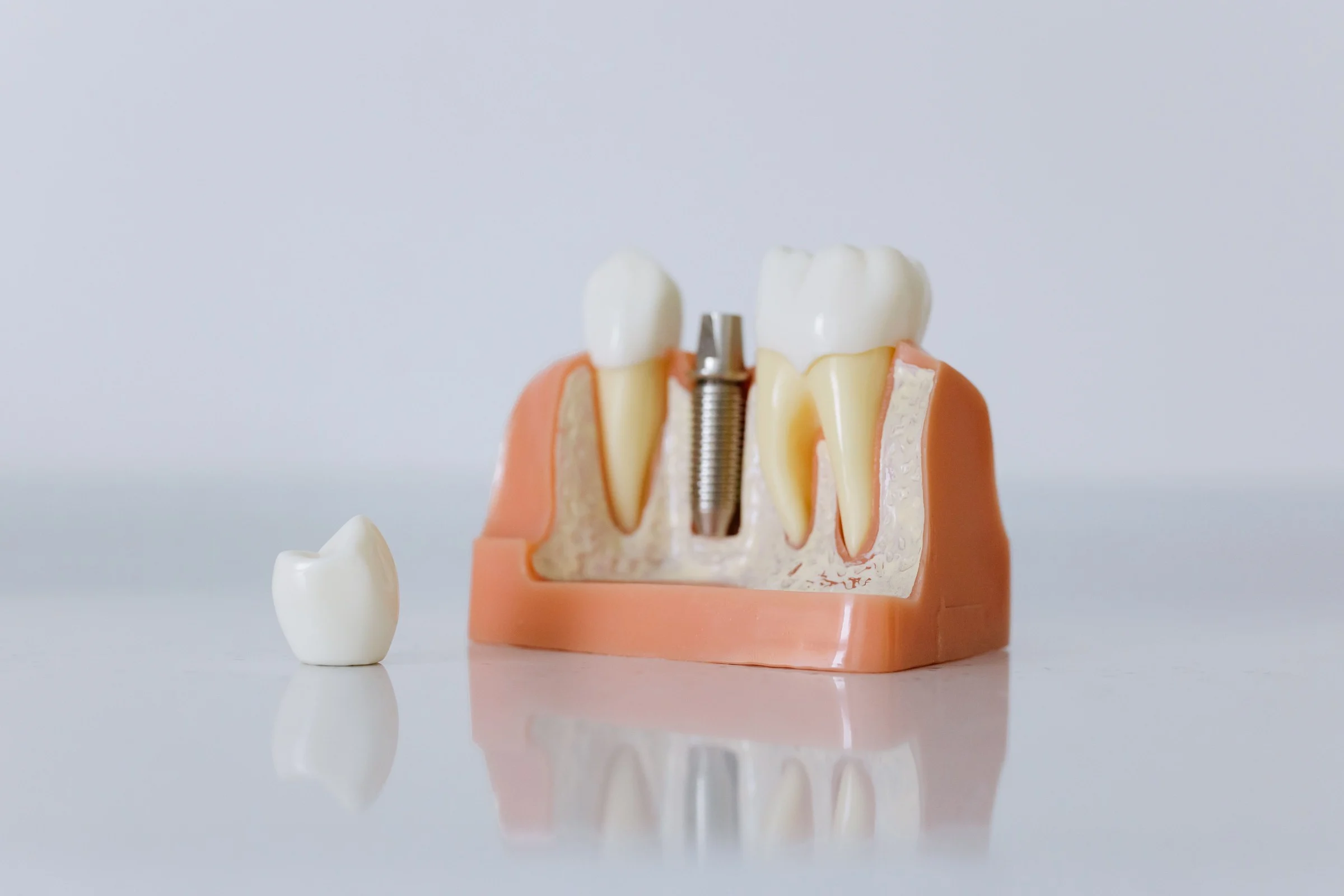
A jaw with no teeth has four options: a full denture, a removable denture held by implants, All-on-4 and All-on-6. In All-on-4 and All-on-6 a full row of teeth is fixed on 4 or 6 implants. If there is enough bone, 6 implants spread the load over more points; if bone is limited, 4 implants can often be used without extra bone procedures. The choice is made after the examination, an X-ray and, if needed, a 3D scan.
The four options
- Full denture. A removable denture that rests on the gum and the palate. It needs no surgery.
- Removable denture held by implants. The denture is held on 2 or 4 implants by attachments that work like press studs. It is still taken out and put in, but it holds much more firmly.
- All-on-4. A full row of teeth is screwed on to 4 implants.
- All-on-6. A full row of teeth is screwed on to 6 implants.
The difference between All-on-4 and All-on-6
In both methods the front implants are placed upright and the back implants at an angle. The angle lets the implant hold on to a longer stretch of bone; the back of the jaw is supported without coming close to the sinus in the upper jaw or the nerve in the lower jaw.
If there is enough bone, 6 implants spread the chewing load over more points. If bone is limited, 4 implants can often be used without extra bone procedures.
The options compared
| All-on-4 | All-on-6 | Removable denture | |
|---|---|---|---|
| Implants | 4 | 6 | None |
| Fixed or removable | Fixed | Fixed | Removable |
| Bone needed | Less | More | None |
| Palate | Open | Open | May be covered |
| Treatment time | 3 to 6 months | 3 to 6 months | 2 to 4 weeks |
Temporary and permanent teeth
Until the implants have bonded with the bone, the row of teeth is a temporary one made of acrylic. If the implants are firm enough, the temporary teeth are fitted within a few days. When the implants have bonded, after 3 to 6 months, the permanent teeth are made from more durable materials.
How is the choice made?
The choice depends on the amount of bone, on your general health and on what you expect. The remaining teeth, the gums and the jawbone are assessed at the examination and on a panoramic X-ray, and on a 3D scan if it is needed. Uncontrolled diabetes, heavy smoking and medication for bone loss are assessed separately at the examination.
The results of any surgical or dental procedure differ from person to person.
Sources and further reading
- Dentures (false teeth)NHS (United Kingdom)
- Dental implants: frequently asked questionsEuropean Federation of Periodontology