 Dental implants
 All-on-4 and All-on-6
 Zirconium crowns
 Porcelain veneers
 Hollywood smile
 Composite bonding
 Teeth whitening
The short answer
A bone graft is used when the jawbone is not high or wide enough for an implant. The graft material is placed where bone is missing, is replaced by your own bone over time and prepares the ground for the implant. The procedure takes 30 to 60 minutes and the graft needs 3 to 6 months to bond. Whether you need one is assessed at the examination and on an X-ray, and on a 3D scan if it is needed.
What is a bone graft?
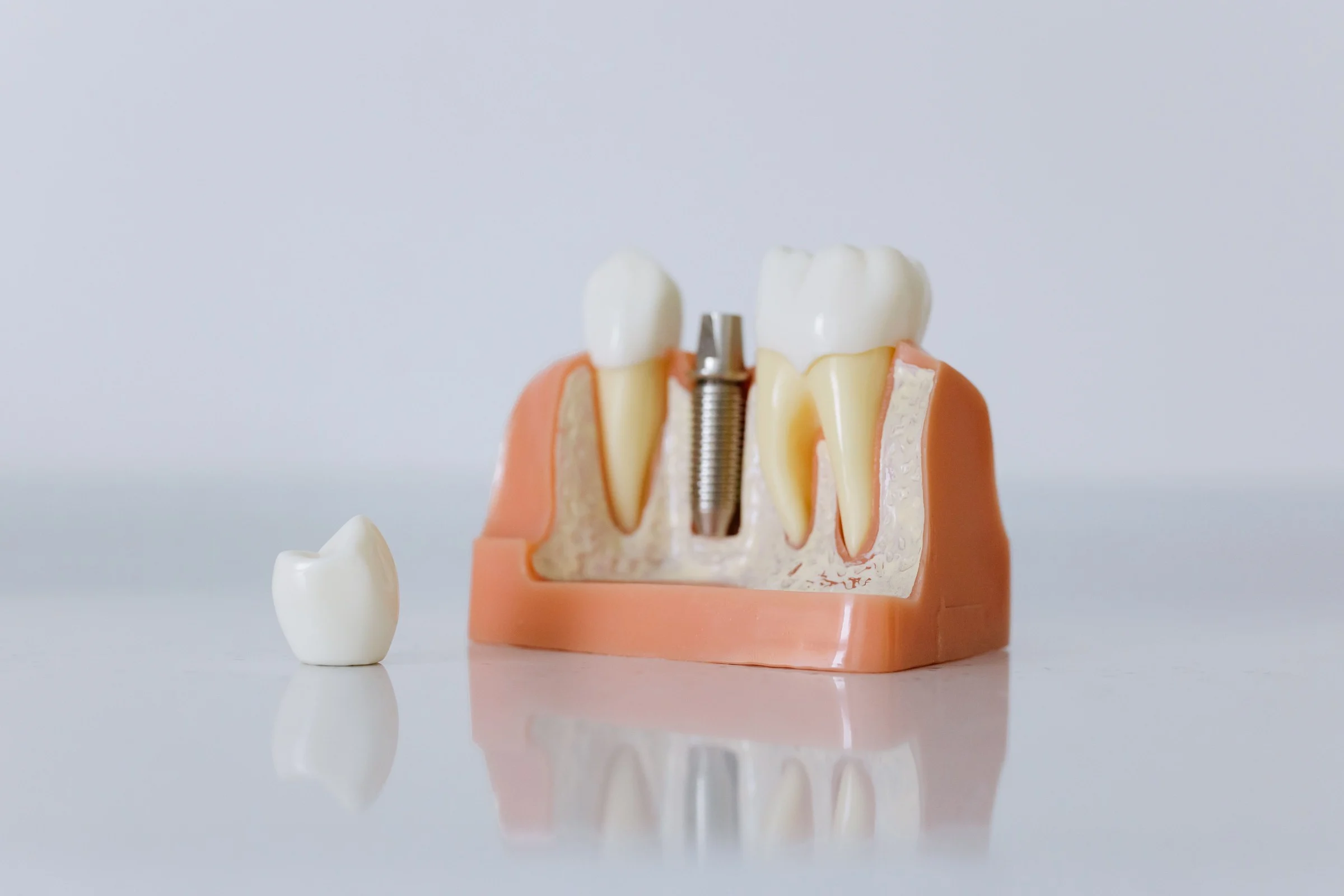
A bone graft is a material that is placed where bone is missing and that supports the formation of new bone. Over time it is replaced by your own bone. This gives the volume of bone that the implant needs to hold on to.
When is it needed?
- When there is not enough bone for an implant. After a tooth is removed, the bone in that area shrinks over time. If the bone is not high or wide enough for an implant, it is supported with a bone graft.
- After a tooth is removed. Graft material can be placed in the socket after the extraction to keep the volume of bone.
- In the upper back jaw. The floor of the sinus can be thin in this area; if the bone is not high enough, a sinus lift is done.
Whether a bone graft is needed is assessed at the examination and on a panoramic X-ray; a 3D scan is requested if it is needed.
What is a sinus lift?
After teeth are lost in the upper back jaw, the sinus can widen downwards. In a sinus lift the lining of the sinus is raised and graft material is placed under it. This gives the height of bone that the implant needs.
How long does it take?
| Procedure | Time |
|---|---|
| Bone graft | 30 to 60 minutes; bonding takes 3 to 6 months |
| Sinus lift | 45 to 90 minutes; healing takes 4 to 6 months |
| Removal of stitches | After 7 to 10 days |
The procedures are done under local anaesthetic. When bone support is needed, the implant treatment as a whole takes longer.
Risks and possible side effects
- Swelling, bruising and pain can occur; they are usually strongest in the first 2 to 3 days.
- As with every surgical procedure, there is a risk of infection.
- Smoking slows healing.
After the procedure
- For the first 24 hours hold something cold against your cheek over the area from time to time.
- Do not smoke for the first 48 hours.
- Eat soft, lukewarm food.
- Take the medication you were given for as long as advised.
- With pain that gets worse, fever or bleeding that does not stop, contact the clinic.
The results of any surgical or dental procedure differ from person to person.
Sources and further reading
- Dental Implant ProceduresAmerican Academy of Periodontology
- Interventions for replacing missing teeth: augmenting the maxillary sinus to enable implantsCochrane, plain language summary